

Essentials of Strength Training and Conditioning
Essentials of Strength Training and Conditioning
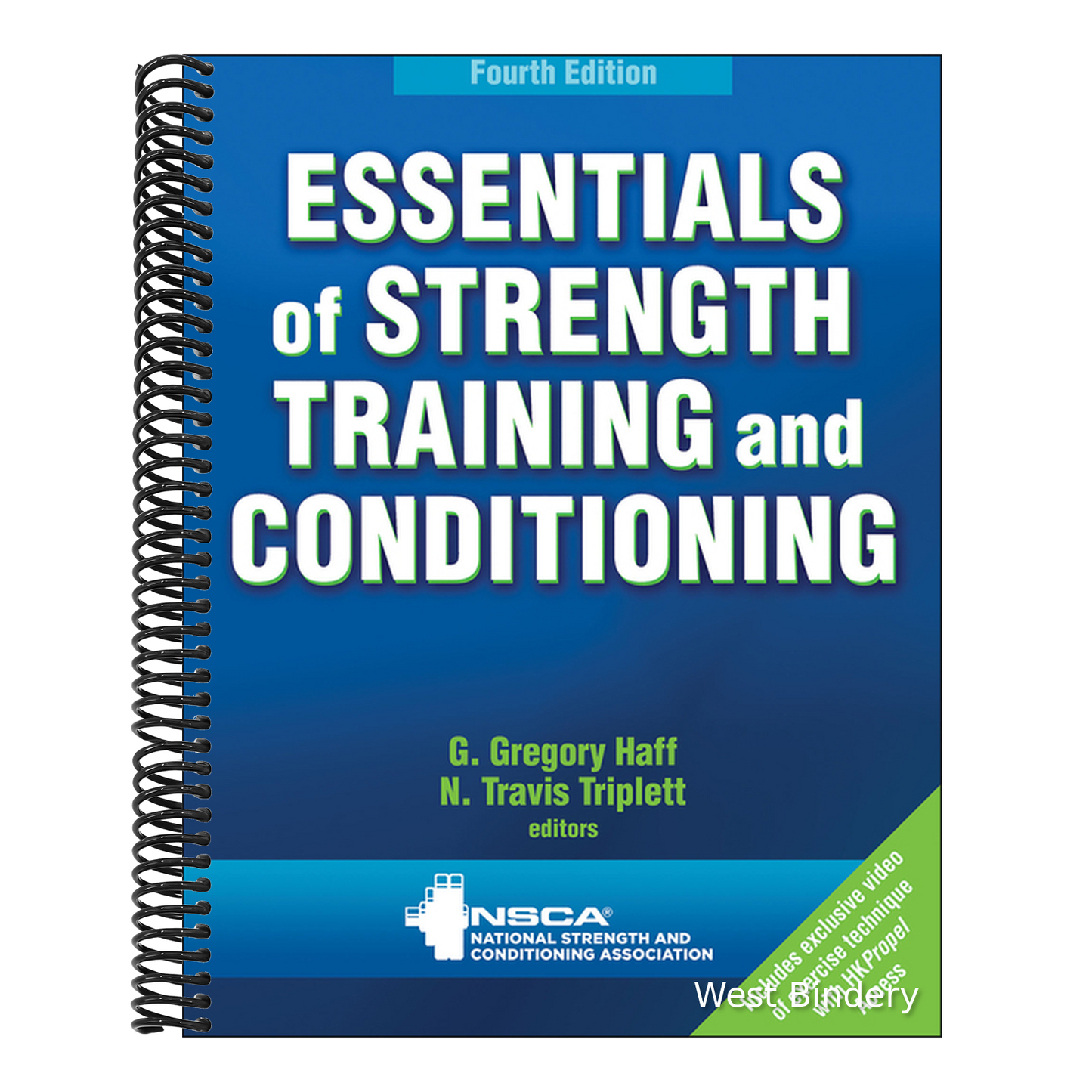
Brief Description: Issued with key code to provide access to a Web resource. Review Quotes: "This is the most comprehensive reference available for exercise professionals in the area of strength...
Vendor
Human Kinetics PublishersType
Print BooksBinding
Spiral BindingCouldn't load pickup availability
People are viewing this right now
Details
Shipping & Returns
Reviews (0)
FAQ
|
Brief Description: Jeffrey M. McBride, PhD Skeletal Musculature Anatomical Planes and Major Body Movements Human Strength and Power Sources of Resistance to Muscle Contraction Joint Biomechanics: Concerns in Resistance Training Conclusion Learning Aids Chapter 3. Bioenergetics of Exercise and Training Trent J. Herda, PhD, and Joel T. Cramer, PhD Essential Terminology Biological Energy Systems Substrate Depletion and Repletion Bioenergetic Limiting Factors in Exercise Performance Oxygen Uptake and the Aerobic and Anaerobic Contributions to Exercise Metabolic Specificity of Training Conclusion Learning Aids Chapter 4. Endocrine Responses to Resistance Exercise William J. Kraemer, PhD, Jakob L. Vingren, PhD, and Barry A. Spiering, PhD Synthesis, Storage, and Secretion of Hormones Muscle as the Target for Hormone Interactions Role of Receptors in Mediating Hormonal Changes Categories of Hormones Heavy Resistance Exercise and Hormonal Increases Mechanisms of Hormonal Interactions Hormonal Changes in Peripheral Blood Adaptations in the Endocrine System Primary Anabolic Hormones Adrenal Hormones Other Hormonal Considerations Conclusion Learning Aids Chapter 5. Adaptations to Anaerobic Training Programs Duncan French, PhD Neural Adaptations Muscular Adaptations Connective Tissue Adaptations Endocrine Responses and Adaptations to Anaerobic Training Cardiovascular and Respiratory Responses to Anaerobic Exercise Compatibility of Aerobic and Anaerobic Modes of Training Overtraining Detraining Conclusion Learning Aids Chapter 6. Adaptations to Aerobic Endurance Training Programs Ann Swank, PhD, and Carwyn Sharp, PhD Acute Responses to Aerobic Exercise Chronic Adaptations to Aerobic Exercise Adaptations to Aerobic Endurance Training External and Individual Factors Influencing Adaptations to Aerobic Endurance Training Overtraining: Definition, Prevalence, Diagnosis, and Potential Markers Conclusion Learning Aids Chapter 7. Age- and Sex-Related Differences and Their Implications for Resistance Exercise Rhodri S. Lloyd, PhD, and Avery D. Faigenbaum, EdD Children Female Athletes Older Adults Conclusion Learning Aids Chapter 8. Psychology of Athletic Preparation and Performance Traci A. Statler, PhD, and Andrea M. DuBois, MS Role of Sport Psychology Ideal Performance State Energy Management: Arousal, Anxiety and Stress Influence of Arousal and Anxiety on Performance Motivation Attention and Focus Psychological Techniques for Improved Performance Enhancing Motor Skill Acquisition and Learning Conclusion Learning Aids Chapter 9. Basic Nutrition Factors in Health Marie Spano, MS, RD Role of Sport Nutrition Professionals Standard Nutrition Guidelines Macronutrients Vitamins Minerals Fluid and Electrolytes Conclusion Learning Aids Chapter 10. Nutrition Strategies for Maximizing Performance Marie Spano, MS, RD Precompetition, During-Event, and Postcompetition Nutrition Nutrition Strategies for Altering Body Composition Feeding and Eating Disorders Conclusion Learning Aids Chapter 11. Performance-Enhancing Substances and Methods Bill Campbell, PhD Types of Performance-Enhancing Substances Hormones Dietary Supplements Conclusion Learning Aids Chapter 12. Principles of Test Selection and Administration Michael McGuigan, PhD Reasons for Testing Testing Terminology Evaluation of Test Quality Test Selection Test Administration Conclusion Learning Aids Chapter 13. Administration, Scoring, and Interpretation of Selected Tests Michael McGuigan, PhD Measuring Parameters of Athletic Performance Selected Test Protocols and Scoring Data Statistical Evaluation of Test Data Conclusion Learning Aids Chapter 14. Warm-Up and Flexibility Training Ian Jeffreys, PhD Warm-Up Flexibility Types of Stretching Conclusion Static Stretching Techniques Dynamic Stretching Techniques Learning Aids Chapter 15. Exercise Technique for Free-Weight and Machine Training Scott Caulfield, BS Fundamentals of Exercise Technique Spotting Free-Weight Exercises Conclusion Resistance Training Exercises Learning Aids Chapter 16. Exercise Technique for Alternative Modes and Nontraditional Implement Training G. Gregory Haff, PhD, Doug Berninger, MEd, and Scott Caulfield, BS General Guidelines Body-Weight Training Methods Core Stability and Balance Training Methods Variable-Resistance Training Methods Nontraditional Implement Training Methods Unilateral Training Conclusion Alternative Modes and Nontraditional Exercises Learning Aids Chapter 17. Program Design for Resistance Training Jeremy M. Sheppard, PhD, and N. Travis Triplett, PhD Principles of Anaerobic Exercise Prescription Step 1: Needs Analysis Step 2: Exercise Selection Step 3: Training Frequency Step 4: Exercise Order Step 5: Training Load and Repetitions Step 6: Volume Step 7: Rest Periods Conclusion Learning Aids Chapter 18. Program Design and Technique for Plyometric Training David H. Potach, PT, and Donald A. Chu, PhD, PT Plyometric Mechanics and Physiology Design of Plyometric Training Programs Age Considerations Plyometrics and Other Forms of Exercise Safety Considerations Conclusion Plyometric Drills Learning Aids Chapter 19. Program Design and Technique for Speed and Agility Training Brad H. DeWeese, EdD, and Sophia Nimphius, PhD Speed and Agility Mechanics Neurophysiological Basis for Speed Running Speed Agility Performance and Change-of-Direction Ability Methods of Developing Speed Methods of Developing Agility Program Design Speed Development Strategies Agility Development Strategies Conclusion Speed and Agility Drills Learning Aids Chapter 20. Program Design and Technique for Aerobic Endurance Training Benjamin H. Reuter, PhD, and J. Jay Dawes, PhD Factors Related to Aerobic Endurance Performance Designing an Aerobic Endurance Program Types of Aerobic Endurance Training Programs Application of Program Design to Training Seasons Special Issues Related to Aerobic Endurance Training Conclusion Aerobic Endurance Training Exercises Learning Aids Chapter 21. Periodization G. Gregory Haff, PhD Central Concepts Related to Periodization Periodization Hierarchy Periodization Periods Applying Sport Seasons to the Periodization Periods Undulating Versus Linear Periodization Models Example of an Annual Training Plan Conclusion Learning Aids Chapter 22. Rehabilitation and Reconditioning David H. Potach, PT, and Terry L. Grindstaff, DPT Types of Injury Tissue Healing Rehabilitation and Reconditioning Strategies Program Design Reducing Risk of Injury and Reinjury Conclusion Learning Aids Chapter 23. Facility Design, Layout, and Organization Andrea Hudy, MA General Aspects of New Facility Design Existing Strength and Conditioning Facilities Assessing Athletic Program Needs Designing the Strength and Conditioning Facility Arranging Equipment in the Strength and Conditioning Facility Maintaining and Cleaning Surfaces and Equipment Conclusion Learning Aids Chapter 24. Facility Policies, Procedures, and Legal Issues Traci Statler, PhD, and Victor Brown, MS Mission Statement and Program Goals Legal and Ethical Issues Staff Policies and Activities Facility Administration Emergency Planning and Response Conclusion Biographical Note: The National Strength and Conditioning Association (NSCA) is the world's leading organization in the field of sport conditioning. Drawing on the resources and expertise of the most recognized professionals in strength training and conditioning, sport science, performance research, education, and sports medicine, the NSCA is the world's trusted source of knowledge and training guidelines for coaches and athletes. The NSCA provides the crucial link between the lab and the field. G. Gregory Haff, PhD, CSCS, *D, FNSCA, is a professor of strength and conditioning based in Australia. He has published more than 280 articles, centering his research on performance effects in the areas of strength-training methodologies, performance testing, training theory, and nutritional supplementation.Haff is a past president of the National Strength and Conditioning Association (NSCA) and a senior associate editor for the Journal of Strength and Conditioning Research. In 2021 he received the NSCA Impact Award for his significant contributions to the strength and conditioning profession. Additionally, in 2014 he was the United Kingdom Strength and Conditioning Association (UKSCA) Strength and Conditioning Coach of the Year for Education and Research and the 2011 NSCA William J. Kraemer Outstanding Sport Scientist Award winner. He is a certified strength and conditioning specialist with distinction (CSCS, *D), a UKSCA-accredited strength and conditioning coach (ASCC), and an accredited Australian Strength and Conditioning Association level 2 strength and conditioning coach. Additionally, Haff is a national-level weightlifting coach in the United States and Australia. He serves as a consultant for numerous sporting bodies, including teams in the Australian Football League, Australian Rugby Union, Australian Basketball Association, and National Football League. N. Travis Triplett, PhD, CSCS, *D, FNSCA, is a professor and chairperson of the department of health and exercise science at Appalachian State University in Boone, North Carolina. She has served as the secretary-treasurer of the board of directors for the National Strength and Conditioning Association (NSCA) and was the 2010 NSCA William J. Kraemer Outstanding Sport Scientist award winner. She has served on two panels for NASA, one for developing resistance exercise countermeasures to microgravity environments for the International Space Station, and was a sports physiology research assistant at the U.S. Olympic Training Center in Colorado Springs, Colorado. Dr. Triplett is currently a senior associate editor for the Journal of Strength and Conditioning Research and is a certified strength and conditioning specialist with distinction as well as a USA Weightlifting club coach.Publisher Marketing: Developed by the National Strength and Conditioning Association (NSCA) and now in its fourth edition, Essentials of Strength Training and Conditioning is the essential text for strength and conditioning professionals and students. This comprehensive resource, created by 30 expert contributors in the field, explains the key theories, concepts, and scientific principles of strength training and conditioning as well as their direct application to athletic competition and performance. The scope and content of Essentials of Strength Training and Conditioning, Fourth Edition With HKPropel Access, have been updated to convey the knowledge, skills, and abilities required of a strength and conditioning professional and to address the latest information found on the Certified Strength and Conditioning Specialist (CSCS) exam. The evidence-based approach and unbeatable accuracy of the text make it the primary resource to rely on for CSCS exam preparation. The text is organized to lead readers from theory to program design and practical strategies for administration and management of strength and conditioning facilities. The fourth edition contains the most current research and applications and several new features:
Key points, chapter objectives, and learning aids including key terms and self-study questions provide a structure to help students and professionals conceptualize the information and reinforce fundamental facts. Application sidebars provide practical application of scientific concepts that can be used by strength and conditioning specialists in real-world settings, making the information immediately relatable and usable. Online learning tools delivered through HK Propel provide students with 11 downloadable lab activities for practice and retention of information. Further, both students and professionals will benefit from the online videos of 21 foundational exercises that provide visual instruction and reinforce proper technique. Essentials of Strength Training and Conditioning, Fourth Edition, provides the most comprehensive information on organization and administration of facilities, testing and evaluation, exercise techniques, training adaptations, program design, and structure and function of body systems. Its scope, precision, and dependability make it the essential preparation text for the CSCS exam as well as a definitive reference for strength and conditioning professionals to consult in their everyday practice. Note: A code for accessing HK Propel is included with all new print books. |
Author: Nsca -National Strength & Conditioning Association
Publisher: Human Kinetics Publishers
Binding: Hardcover
Pub Date: 2021-06-21
BISAC: Sports & Recreation|Bodybuilding & Weightlifting|Health & Fitness|Exercise|Strength Training|Medical|Sports Medicine|Health & Fitness|Reference
Subjects: Athletes|Physiology|Physical Education and Training|Physical education and training|Physical Fitness|Training of|Methods|Athletic Performance|Resistance Training|Physical Conditioning, Human
Weight: 5.15 lbs
ISBN: 9781718210868
ASIN: -
SKU: SP-9781718210868
Shipping Information: Free delivery on all orders over $45, arrives within 3–5 days, you can also choose expedited shipping
Returns Information: 90-day return policy begins once the item ships, we cover the round-trip shipping costs for returns caused by quality issues (Return Address: 8039 S 192nd ST, STE 120, Kent, WA, 98032)
Exchanges Information: The new order will be processed once the old order is in transit back to the warehouse. Customers will only be charged for the old order if it has not been returned to the warehouse within 14 days
After-Sales Service: Simply email your requirements to support@westbindery.com, and we will process them as soon as possible upon receipt
Customer Service: Online 24/7, we recommend contacting us via email as a first choice, though you can also chat with us online
Value-added service: If you are giving the books as a gift, we also offer gift-wrapping services
Lifetime Warranty: At West Bindery, we are committed to providing you with nothing but the best. We want you to be completely satisfied with your purchase. That's why all West Bindery books come standard with a lifetime warranty
Q: How do I track my order?
A: Order Tracking InformationOnce your order has been placed and processed, you will receive a confirmation email containing your order details. This email will include:
- A tracking number
- A link to our tracking page
How to Track Your OrderClick on the tracking number link in your confirmation email.
Important Notes: Tracking information may not be immediately available after you place your order. It can take up to 36 hours for the tracking number to activate in our system. If no updates are visible right away, please check back later.
Q: What if my package gets lost or arrives damaged?
A: Lost packages: At West Bindery, we strive to ensure every order reaches you in perfect condition. In the event that your order is lost during transit, please reach out to our customer support team here with your order number and any relevant details.
Damaged packages: Please report to our customer support team here within 24 hours of receiving the order and include photos of the damaged items or package. We will review the provided documentation and, if necessary, arrange for a replacement or issue a refund.
Q: Can I change my shipping address after my order is submitted?
A: Unfortunately, we’re unable to change the shipping address once your order has been submitted. If you’ve entered the wrong address, please contact us at support@westbindery.com as soon as possible—we’ll do our best to help before your order ships.
Q: What happens if I accidentally ordered multiple copies of the same book?
A: If you have accidentally ordered multiple copies of the same book, you can return the excess copies by following our return process. Please ensure the items are in their original condition and returned within the 90-day window from the shipping date. Upon receipt and inspection of the items, if the refund is approved, it will be processed on your original payment method. Visit our return center and follow the provided instructions to ensure a smooth and timely return.
Q: I received an incomplete order, what should I do?
A: How to Report an Incomplete Order: To help us address your concern, please follow these steps:
- Email our support team at support@westbindery.com with:Your order numberThe email address associated with your order
- Let us know which item(s) is/are missing from your order.
What Happens Next: Our team will verify your order and investigate the issue. We will contact you within 1 business day with an update or resolution, including sending the missing item(s) or other suitable options.