

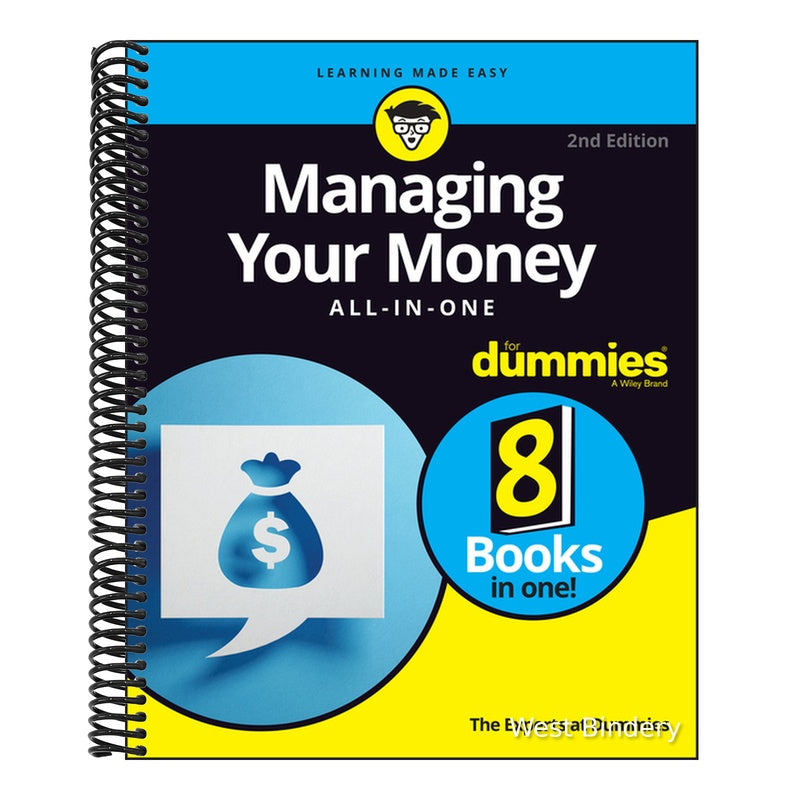
Managing Your Money All-In-One for Dummies
Managing Your Money All-In-One for Dummies
Table of Contents: Introduction 1 About This Book 1 Foolish Assumptions 2 Icons Used in This Book 3 Beyond the Book 3 Where to Go from Here 3 Book 1:...
Vendor
For DummiesType
Print BooksBinding
Spiral BindingCouldn't load pickup availability
People are viewing this right now
Details
Shipping & Returns
Reviews (0)
FAQ
|
Table of Contents: Introduction 1 About This Book 1 Foolish Assumptions 2 Icons Used in This Book 3 Beyond the Book 3 Where to Go from Here 3 Book 1: Taking Charge of Your Finances 5 Chapter 1: Assessing Where You Are Financially 7 Asking Some Preliminary Questions 8 Evaluating Your Relationship with Money 9 Recognizing emotional spending 9 Living for the moment 9 Checking Out Your Credit Reports 10 Getting copies of your credit reports 10 Knowing why your reports matter 11 Finding Out Your FICO Score 11 Comparing Spending and Income 12 Gathering the necessary materials 12 Categorizing your expenses 13 Figuring out the fritter factor 17 Totaling spending and earnings 17 Calculating your financial bottom line 18 Assessing Your Spending Habits 18 Cataloging What You Own 20 Adding Up What You Owe 22 Chapter 2: Improving Your Relationship with Money 25 Working with Your Partner to Achieve Financial Goals 26 Recognizing your financial strengths and weaknesses 26 Identifying long-term goals 28 Establishing savings goals 29 Finding peaceful solutions to differences 29 Pulling together with your spouse or partner 30 Talking money with your children 31 Believing in Yourself 33 Handling Setbacks 35 Asking for Help 37 Digging Out of Debt 38 Step 1: Acknowledge the problem 38 Step 2: Cut the cards 38 Step 3: Set a good budget and live within it 39 Step 4: Contact your creditors 39 Budgeting for the Future 39 Step 1: Categorize your expenses 40 Step 2: Estimate what you spend 41 Step 3: Calculate and adjust 41 Chapter 3: Building and Sticking to a Budget 43 Comparing Monthly Spending and Income 44 Tackling a Budget Deficit 49 Cutting expenses 49 Reducing debt before saving 49 Using other strategies 50 Paying the Important Stuff If You Can't Pay Everything 52 Distinguishing between secured and unsecured debt 52 Knowing when to prioritize an unsecured debt 53 Examining a Budget Surplus 54 Finalizing and Sticking to Your Budget 54 Steeling your resolve 55 Checking your progress each month 55 Chapter 4: Cutting Spending and Boosting Income 59 Finding Ways to Spend Less 60 Looking for good deals 60 Spending less on your housing 60 Lowering your utility bills 61 Eating for less 62 Paying less for transportation 64 Having fun for less 65 Looking good for less 66 Dressing for less 66 Reducing your phone costs 67 Saving on prescription drugs 67 Inching down your insurance costs 68 Bringing in More Bucks 70 Earning more at your current job 71 Looking for a new job 71 Getting (and surviving) a second job 74 Considering freelancing 75 Chapter 5: Cleaning Up Your Credit Reports 77 Understanding the True Value of Good Credit 78 Reviewing Your Reports for Problems 81 Using the Law to Get Your Credit Record Clean and Keep It That Way 84 Identifying and Disputing Inaccurate Information 87 Understanding the dispute process 87 Correcting all your credit reports 88 Contacting the creditor 93 Adding Positive Information to Your Credit Report 94 Asking your landlord to report your rent payments 94 Adding your utility and cell-phone payments to your report 94 Opening new credit accounts 95 Adding a 100-word statement 95 Book 2: Managing Home and Personal Finances 97 Chapter 1: Running a Money-Smart Household 99 Reaching Out to Touch Someone 99 Saving on phone bills 100 Using email and texting to stay in touch 100 Rediscovering the joys of letter writing 100 Saving on Climate Control 101 Dressing for the weather 101 Keeping your cool when the weather's not 101 Warming the house 104 Cutting Back on Electricity and Gas Use 106 Improving your appliance efficiency 107 Shedding some light on the subject 107 Trash Talk: Controlling Garbage Costs 108 Reducing what you throw away 108 Reusing household items in creative ways 109 Cutting Down on Water Use 110 Keeping a Ceiling on Housing Budgets 111 Saving money on rent 111 Saving money on home ownership 112 Cutting Transportation Costs 115 Finding a deal on a set of wheels 115 Using public transportation 117 Biking and walking 117 Finding bargains on airfare and rental cars 118 Opting to travel by train or bus 119 Purchasing Appliances 119 Keeping energy efficiency in mind 119 Shopping for scratch-and-dent and secondhand 120 Thinking twice about renting-to-own 120 Chapter 2: Selecting the Best Home Purchase Loan 121 Three Questions to Help You Pick the Right Mortgage 122 How long do you plan to keep your mortgage? 122 How much financial risk can you accept? 123 How much money do you need? 124 Fixed-Rate Mortgages: No Surprises 125 Adjustable-Rate Mortgages (ARMs) 127 How an ARM's interest rate is determined 129 How often does the interest rate adjust? 132 What are the limits on rate adjustments? 132 Does the loan have negative amortization? 133 Fine-Tuning Your Thought Process 135 Finding funds 136 Making the 30-year versus 15-year mortgage decision 136 Getting a Loan When Rates Are High 137 Chapter 3: Handling a Mortgage Meltdown 139 Assessing the Damage from a Mortgage Meltdown 140 Understanding How Mortgages Differ from Other Loans 141 Spotting a foreclosure on the horizon 142 Counting to 90 142 Knowing Where to Turn for Help 143 Finding good help for free 143 Working with your mortgage servicer 144 Avoiding help that hurts 145 Considering Alternatives to Going Down with the Ship 146 What to do first 146 What to do for more serious problems 147 What to do to end matters 147 Managing a foreclosure 148 Strategic default: Stopping payments 149 Dealing with Deficiencies 151 Preparing for "Credit Winter" 152 Chapter 4: Keeping a Lid on Medical Costs 155 Saving on Medical Expenses 155 Keeping a close eye on bills 155 Looking into payment plans 156 Coordinating insurance benefits 156 Finding less-expensive prescriptions 156 Discovering What Makes a Great Health Insurance Plan 157 Deciding Between Individual and Group 158 Pricing 158 Underwriting 158 Benefit levels 159 Renewability 159 Coverage flexibility 159 Saving Money on Individual Coverage 160 Saving directly 160 Saving indirectly with self-care 163 Coping with Health Insurance Problems 164 Insuring the uninsurable 164 Staying insured through hard times 165 Insuring your kids when your policy no longer covers them 165 Evaluating insurance available through college 166 Understanding temporary health insurance 167 Continuing coverage following a divorce 168 Deciding on a conversion policy 169 Considering HIPAA instead 170 Taking Decisive Action 174 Reviewing bills with a fine-tooth comb 175 Making your plan pay what it should 175 Taking advantage of hospital discounts 176 Reducing your medical debt 177 Chapter 5: Using the Internet to Help Manage Your Finances 179 Giving Yourself an Online Financial Makeover 180 Using the Internet to Budget 181 Finding Online Resources to Track Your Income and Expenses 184 Using the Internet to Get Free Financial Advice 185 Finding Out What You're Worth 186 Book 3: Dealing with Debt 189 Chapter 1: Tackling What You Owe 191 Taking Stock of Your Finances 192 Using a Budget to Get Out of Debt 193 Taking the Right Steps When You Have Too Much Debt 194 Handling Debt Collectors 195 Realizing your rights 196 Understanding why debt collectors behave as they do 197 Getting a Financial Education 198 The difference between good debt and bad debt 198 Distinguishing between types of credit 199 Seeing yourself through a creditor's eyes 200 Building a better credit history 201 Chapter 2: Starting or Restarting Your Credit in Real Life 203 Debunking Misinformation about Banking and Credit 204 Why you need credit 205 Why credit is safe 206 Obtaining Credit: Starting Out on the Right Foot 207 Establishing a credit file without a Social Security number 208 Setting goals before you set out 209 Establishing a relationship with a financial institution 210 Using prepaid and reloadable cards 212 Fattening up your credit file 212 Avoiding high interest, fees, and scams 214 Overcoming Credit Fears and Mistakes 215 Qualifying for First-Time Cards and Lending 217 Getting a credit card 217 Using savings for credit 219 Considering Credit for Students and Military Members 220 Giving credit to students 220 Following military credit rules 222 Chapter 3: Consolidating Your Debts 225 Knowing When Debt Consolidation Makes Sense 225 Considering Your Options 226 Transferring balances 227 Getting a bank loan 229 Borrowing against your life insurance policy 233 Borrowing from your 401(k) retirement plan 234 Avoiding Dangerous Debt-Consolidation Possibilities 236 Chapter 4: Negotiating with Creditors and Getting Help 237 Getting Ready to Negotiate 238 Listing all your debts 239 Zeroing in on certain debts first 239 Reviewing your budget 240 Pulling together your financial information 241 Getting Down to Business: Contacting Creditors 243 Making the Agreement Official: Putting It in Writing 244 Knowing the Deal with Credit Counseling 246 Finding a Reputable Credit Counseling Agency 246 Differentiating the good from the bad 247 Locating agencies in your area 248 Knowing what to ask and what to expect 249 Working with a Credit Counselor 250 Sharing your financial situation 251 Whittling down your debt with a debt management plan 251 Avoiding Debt Settlement Firms 254 Being wary of false promises 254 Preventing worse financial problems 255 Getting Relief If You Get Ripped Off 255 Chapter 5: Considering Bankruptcy 257 Viewing Bankruptcy in a Historical Context 258 Debunking Bankruptcy Myths 260 "People who go bankrupt are sleazy deadbeats" 260 "Bankruptcy is the easy way out for folks who can pay their bills" 262 "Bankruptcy threatens the ethical foundations of our society" 262 "Honest folks pay a 'tax' to support people who are bankrupt" 263 Understanding What You Can Gain Through Bankruptcy 263 Stopping creditors in their tracks 265 Wiping out most of your debts 266 Catching up on back mortgage and car payments 267 Filing bankruptcy to pay some debts over time 267 Using bankruptcy to pay all your debts 267 Knowing What You Can Lose in Bankruptcy 268 Considering Alternatives to Bankruptcy 269 Introducing the Different Types of Personal Bankruptcy 270 Liquidations (Chapter 7) 271 Consumer reorganizations (Chapter 13) 271 Weighing the Consequences of Not Filing Bankruptcy 272 Claims secured by your car 272 Claims secured by your home 273 Student loans 273 Support obligations 273 Fines and restitution 273 Taxes 274 Lawsuits 274 Using the Statute of Limitations 274 Book 4: Saving and Investing 275 Chapter 1: Becoming a Saver 277 Eliminating Most of the Fat 278 Making lists of where you are now 278 Carving away the truly wasteful 279 Lowering Your Debt 280 Trimming Other Costs 282 Changing Your Perspective and Watching Your Savings Grow 283 Paying yourself first 283 Educating yourself about investing 284 Taking advantage of giveaways 287 Saving While in Debt 289 Chapter 2: Investing in Stocks, Bonds, and Mutual Funds 291 Stock: Owning a Piece of the Rock 292 Understanding stock 292 Conducting business in stock exchanges 293 Brushing up: A quick stock glossary 294 Picking a stock investment strategy 296 Buying Bonds for Fixed Income 297 Understanding bonds 297 Sorting out different kinds of bonds 298 Interpreting bond ratings 299 Mutual Funds: The Power of Many 301 Understanding mutual funds 301 Defining different kinds of mutual funds 302 Doing It Your Way versus Using a Broker 302 Full-service brokers 303 Discount brokers 304 Online brokers 304 Avoiding Five Common Investing Mistakes 304 Investing before you're ready 305 Investing without goals 305 Believing those "hot" tips 306 Not diversifying your portfolio 307 Selling too soon (or too late) 307 Chapter 3: Saving for Retirement 309 Targeting Your Retirement Date 310 Getting Your Hands on Your Money 311 Drawing on your Social Security 311 Tapping into other sources 316 Living the retirement life 317 Testing the waters in your gene pool 318 Developing Your Retirement Savings Plan 318 Cutting down on your expenses 318 Picturing your progress 320 Counting on compounding 324 Chapter 4: Saving for College 327 Doing the Numbers 328 Exploring Section 529 Plans 329 Checking Out Coverdell Accounts 329 But Wait! There's More! 330 Maximizing Your Savings, Minimizing Your Tax 332 Checking Out the Cost of College 332 Tackling tuition 333 Accounting for housing 333 Factoring in books and supplies 335 Looking into the Costs of Various Types of Schools 336 Exploring career and vocational training schools 336 Taking community college and continuing education classes 336 Going for a four-year public education 337 Getting your education in private 337 Chapter 5: Working with an Online Broker 339 Finding the Best Broker for You 340 The nine main factors to consider 340 Gotchas to watch out for 342 Separating the Types of Brokerages 342 Paying the minimum with a deep discounter 343 Get more with a discounter 344 Full-service traditional 348 Avoiding Hidden Fees 350 Finding Out What Reviewers Think 351 Is Your Money Safe? Checking Out Your Broker 352 Cutting the Cord: Mobile Trading 354 Opening and Setting Up Your Account 355 The checklist of what you need to know 356 The checklist of what you need to have 356 Book 5: Protecting Your Money and Assets 357 Chapter 1: Combating Identity Theft 359 Keeping Thieves at Bay 360 Getting on the technology train 361 Looking out for phishing scams 361 Safeguarding your computer data 363 Keeping passwords secret 364 Protecting your mail 365 Storing financial data in your home 366 Putting your credit information on ice 366 Shielding your credit card number 367 Catching Identity Thieves in the Act 369 Watching for early-warning notices 370 Getting early warnings from the IRS 371 Handling a collections call 372 Detecting unauthorized charges 372 Being denied credit or account access 373 Noticing missing account statements 373 Taking Fast Action When Identity Theft Occurs 374 Communicating with the right people 374 Protecting your identity through the FACT Act 377 Sending out a fraud alert 379 Blocking fraudulent credit lines 380 Getting and Using Credit After Identity Theft 380 Closing and reopening your accounts 380 Altering your PINs and passwords 381 Changing your Social Security number and driver's license number 382 Chapter 2: Online Banking 383 Online and Traditional Banks 383 Advantages of online banking 384 Online bank access 384 Accounting for Your Accounts 385 Savings account 385 Basic checking account 386 Interest-bearing checking account 386 MMDA or MMA 386 cd 386 Choosing an Online Bank That's Right for You 387 Identifying your user profile 387 Noting the fees when you shop 388 Opening Your Online Bank Account 390 Chapter 3: Homeowner's Insurance: Protecting Your Stuff 393 Introducing the Six Parts of a Homeowner's Policy 394 Insuring your residence (Coverage A) 394 Insuring detached structures (Coverage B) 396 Insuring your belongings (Coverage C) 397 Insuring additional living expenses (Coverage D) 398 Insuring your personal liability (Coverage E) 399 Insuring guests' medical bills (Coverage F) 401 Choosing the Right Homeowner's Property Coverages 401 Understanding the causes-of-loss options 402 Introducing the six most common homeowner's policies 403 Establishing Property Coverage Limits 404 Determining the replacement cost of your home 405 Guaranteeing you'll have enough insurance to rebuild 407 Estimating the cost to replace belongings 408 Choosing your deductible 409 Documenting Your Claim 411 Chapter 4: Auto Insurance Basics 413 Managing Your Lawsuit Risks 413 Reviewing noninsurance strategies 414 Buying liability insurance 414 Insuring Your Personal Injuries 419 Understanding how uninsured and underinsured motorist coverage works 420 Saving money on medical coverage 423 Dealing with Damage to Your Vehicle 424 Choosing cost-effective deductibles 425 Knowing when to drop collision and comprehensive coverage 428 Evaluating Road Service and Car Rental Coverages 429 Chapter 5: Insuring Yourself: Life Insurance 431 Assessing the Need 431 Who doesn't need life insurance 432 Who does need life insurance 432 Determining How Much Coverage You Need 433 Looking at a hypothetical family 433 Using the multiple of income method 434 Using the web to estimate needs 434 Speaking the Language 436 Understanding the Types of Life Insurance 437 Ideal use 437 Pricing 438 Agent commissions 438 Understanding the Variations of Permanent Life Insurance 439 Whole life 440 Universal life 441 Variable life 442 Cash value options when dropping permanent insurance 443 Understanding the Variations of Term Life Insurance 445 Annual renewable term (ART) 445 Fixed-rate level term 445 Decreasing term 447 Insurance from your mortgage company 447 Making Your Choice 448 Evaluating Life Insurance Sources 449 Considering an agent 450 Buying without an agent 452 Debunking Myths and Mistakes 454 Mistake: Trading cash value for death protection needs 454 Myth: Supplemental group life is cheaper 455 Mistake: Buying life insurance in pieces 455 Mistake: Accidental death/travel coverage 456 Mistake: Covering only one income 456 Mistake: Ignoring a stay-at-home parent's value 456 Mistake: Covering children, not parents 457 Mistake: Decreasing term insurance 457 Mistake: Being unrealistic about how much life insurance you can afford 457 Mistake: Buying before you need it 458 Myth: It's cheaper when you're young 458 Book 6: Dealing with the Tax Man 459 Chapter 1: Tax Return Preparation Options and Tools 461 Preparing Your Own Return 462 Taking Advantage of IRS Publications 463 Perusing Tax-Preparation and Advice Guides 464 Using Software 464 Accessing Internet Tax Resources 465 Internal Revenue Service 466 Research 467 Tax preparation sites 468 Hiring Help 468 Deciding whether you really need a preparer 469 Unenrolled preparers 469 Enrolled agents (EAs) 470 Certified public accountants (CPAs) 470 Tax attorneys 471 Finding Tax Preparers and Advisors 473 Chapter 2: Getting and Staying Organized 475 Maintaining the Burden of Proof 476 Keeping Good Records 477 Ensuring a complete and accurate tax return 477 Setting up a record-keeping system 479 Tracking tax information on your computer 480 Deciding when to stash and when to trash 481 Reconstructing Missing Tax Records 481 Property received by inheritance or gift 482 Securities received by inheritance or gift 485 Improvements to a residence 485 Casualty losses 486 Business records 487 Using duplicate account statements 487 Understanding the Cohan Rule 488 Chapter 3: No Form Fits All (Or, What Kind of Taxpayer Are You?) 491 What Rendition of 1040 Shall You Play? 492 Form 1040 492 Form 1040-SR 493 Form 1040-NR 494 Choosing a Filing Status 494 Single 495 Married filing jointly 495 Married filing separately 496 Head of household 500 Qualifying widow(er) with dependent child 502 Counting your dependents 502 Deciding who is your dependent 503 Securing Social Security numbers for dependents 506 Filing for Children and Other Dependents 508 Defining Who Is a Qualifying Child 509 Age test 509 Relationship test 510 Residency test 510 Support test 510 Must You File? 511 When to file 513 If you don't file 513 Where to file 514 How to file 514 Book 7: Retiring Comfortably 517 Chapter 1: Checking the Benefits of a 401(k) 519 Realizing What a 401(k) Does for You 520 Lowers how much tax you pay 520 Gets you matching funds from your employer 525 Makes room for a little something extra: Employer non-matching contribution 526 Allows you to save without tears 527 Vesting: When Your Employer's Contribution Is Yours to Keep 527 Vesting of employer contributions 528 Making exceptions 529 Letting the Pros Work for You 530 Protecting Your Money 530 Meeting minimum standards 531 Avoiding losses in bankruptcy 532 Watching Out for Potential Pitfalls 532 Earning more may mean contributing less 532 Being at the mercy of your plan 533 Chapter 2: Retiring Your Way: IRAs 535 Looking at the Basics of Your IRA 535 Staying traditional 536 Touching on Roth IRAs 537 Benefiting from a spousal IRA 538 Starting an IRA for a child 538 Setting Up Your IRA 539 Deciding where to invest your money 540 Opening your account 541 Maintaining Your IRA 542 Moving Your IRA 542 Chapter 3: Paychecks from Your House: Reverse Mortgages 545 Grasping the Reverse Mortgage Basics 546 Considering common objections 547 Who can get a reverse mortgage? 548 How much money can you get and when? 549 When do you pay the money back? 551 What do you owe? 551 How is the loan repaid? 552 What's the out-of-pocket cost of getting a reverse mortgage? 552 What are the other reverse mortgage costs? 553 What's the total annual rate? 554 How do reverse mortgages affect your government-sponsored benefits? 555 Shopping for a Reverse Mortgage 555 Making major choices 556 Counseling 557 Decid Biographical Note: Ted Benna and Brenda Watson Newmann are coauthors of 401(k)s & IRAs For Dummies. John Ventura was the coauthor of Managing Debt For Dummies with Mary Reed. Eric Tyson is coauthor with Robert S. Griswold on Mortgage Management For Dummies. Jack Hungelmann is author of Insurance For Dummies. Melyssa Barrett, Steve Bucci, Rod Griffin are coauthors of Credit Repair Kit For Dummies. Other authors include Matt Krantz, Deborah Taylor-Hough, James P. Caher, John M. Caher, Kathleen Sindell, Margaret Atkins Munro, N. Brian Caverly, and Jordan S. Simon. Publisher Marketing: A hands-on, power-packed guide to managing all things money Time and money. Those are the two most important assets you have, and smart people manage both of them wisely. Managing Your Money All-in-One For Dummies is your one-stop resource to turn to when you're ready to manage your money. It offers everything you need to confidently handle your finances. When you're ready to create a budget, pay down debt, and scale back your expenses, you'll find the support you need here. If you're eyeing the future, you'll find advice on improving your credit score, saving for college and retirement, and planning an estate. As if all of that isn't enough, this comprehensive book covers other financial topics such as buying insurance, investing in your 401(k), and so much more. The authors of Managing Your Money All-in-One For Dummies explain how to handle your money in a way that encourages you to think and act positively, no matter what your financial situation looks like. And as you move toward financial freedom, you can come back to this book to get advice on topics that go beyond day-to-day money management, such as taking out a mortgage, investing online, and more.
Spend some time learning how to manage your money today. It'll be a wise investment of both of your most valuable assets. |
Author: The Experts at Dummies
Publisher: For Dummies
Binding: Paperback
Pub Date: 2022-06-28
BISAC: Business & Economics / Personal Finance / Money Management
Subjects: Finance, Personal|Debt|Saving and investment|Insurance|Retirement|Planning
Weight: 2.17 lbs
ISBN: 9781119883357
ASIN: -
SKU: SP-9781119883357
Shipping Information: Free delivery on all orders over $45, arrives within 3–5 days, you can also choose expedited shipping
Returns Information: 90-day return policy begins once the item ships, we cover the round-trip shipping costs for returns caused by quality issues (Return Address: 8039 S 192nd ST, STE 120, Kent, WA, 98032)
Exchanges Information: The new order will be processed once the old order is in transit back to the warehouse. Customers will only be charged for the old order if it has not been returned to the warehouse within 14 days
After-Sales Service: Simply email your requirements to support@westbindery.com, and we will process them as soon as possible upon receipt
Customer Service: Online 24/7, we recommend contacting us via email as a first choice, though you can also chat with us online
Value-added service: If you are giving the books as a gift, we also offer gift-wrapping services
Lifetime Warranty: At West Bindery, we are committed to providing you with nothing but the best. We want you to be completely satisfied with your purchase. That's why all West Bindery books come standard with a lifetime warranty
Q: How do I track my order?
A: Order Tracking InformationOnce your order has been placed and processed, you will receive a confirmation email containing your order details. This email will include:
- A tracking number
- A link to our tracking page
How to Track Your OrderClick on the tracking number link in your confirmation email.
Important Notes: Tracking information may not be immediately available after you place your order. It can take up to 36 hours for the tracking number to activate in our system. If no updates are visible right away, please check back later.
Q: What if my package gets lost or arrives damaged?
A: Lost packages: At West Bindery, we strive to ensure every order reaches you in perfect condition. In the event that your order is lost during transit, please reach out to our customer support team here with your order number and any relevant details.
Damaged packages: Please report to our customer support team here within 24 hours of receiving the order and include photos of the damaged items or package. We will review the provided documentation and, if necessary, arrange for a replacement or issue a refund.
Q: Can I change my shipping address after my order is submitted?
A: Unfortunately, we’re unable to change the shipping address once your order has been submitted. If you’ve entered the wrong address, please contact us at support@westbindery.com as soon as possible—we’ll do our best to help before your order ships.
Q: What happens if I accidentally ordered multiple copies of the same book?
A: If you have accidentally ordered multiple copies of the same book, you can return the excess copies by following our return process. Please ensure the items are in their original condition and returned within the 90-day window from the shipping date. Upon receipt and inspection of the items, if the refund is approved, it will be processed on your original payment method. Visit our return center and follow the provided instructions to ensure a smooth and timely return.
Q: I received an incomplete order, what should I do?
A: How to Report an Incomplete Order: To help us address your concern, please follow these steps:
- Email our support team at support@westbindery.com with:Your order numberThe email address associated with your order
- Let us know which item(s) is/are missing from your order.
What Happens Next: Our team will verify your order and investigate the issue. We will contact you within 1 business day with an update or resolution, including sending the missing item(s) or other suitable options.