

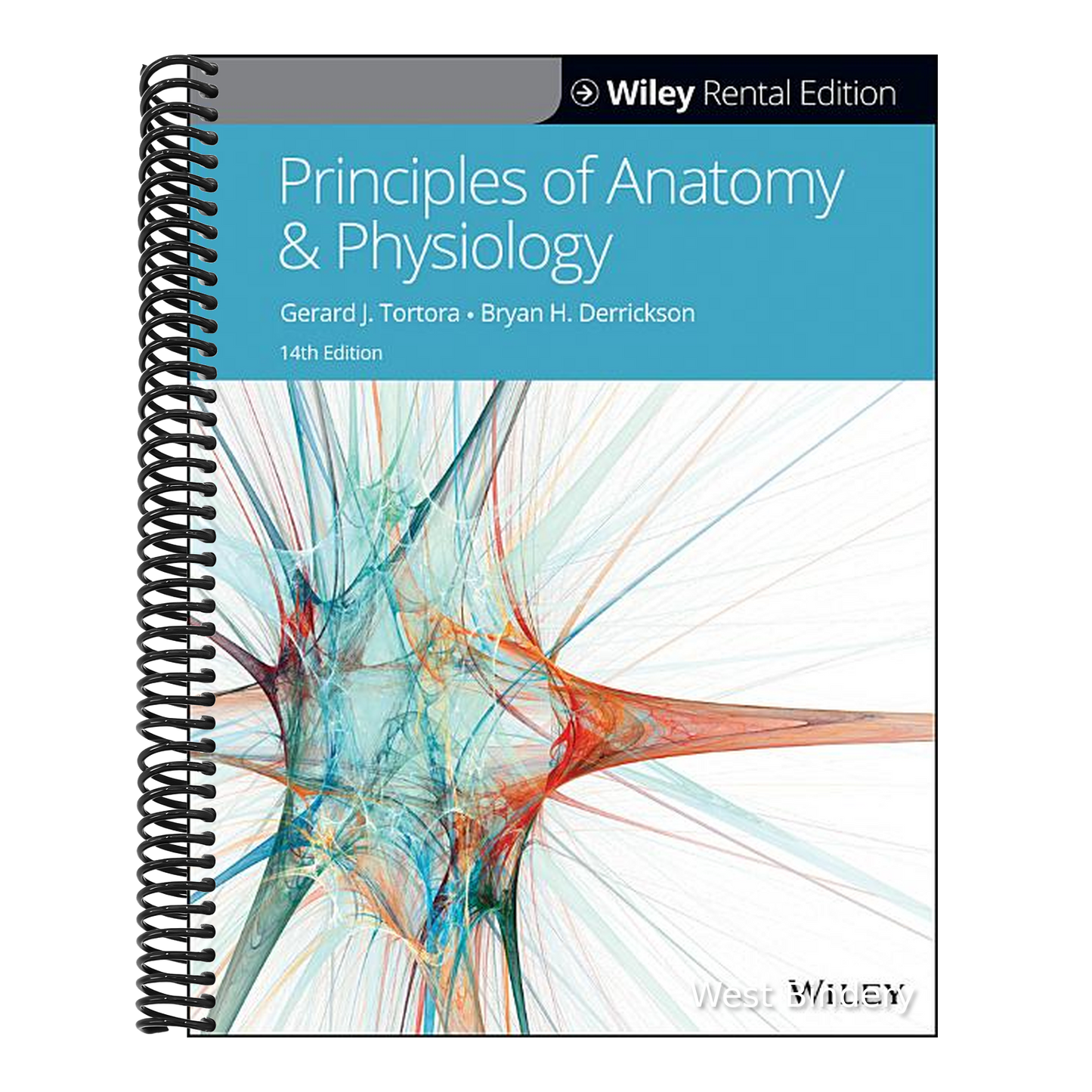
Principles of Anatomy and Physiology
Principles of Anatomy and Physiology
Table of Contents: 1 An Introduction to the Human Body 1 1.1 Anatomy and Physiology Defined 2 1.2 Levels of Structural Organization and Body Systems 2 1.3 Characteristics of the...
Vendor
WileyType
Print BooksBinding
Spiral BindingCouldn't load pickup availability
People are viewing this right now
Details
Shipping & Returns
Reviews (0)
FAQ
|
Table of Contents: 1 An Introduction to the Human Body 1 1.1 Anatomy and Physiology Defined 2 1.2 Levels of Structural Organization and Body Systems 2 1.3 Characteristics of the Living Human Organism 5 1.4 Homeostasis 8 1.5 Basic Anatomical Terminology 12 1.6 Medical Imaging 20 2 The Chemical Level of Organization 27 2.1 How Matter is Organized 28 2.2 Chemical Bonds 31 2.3 Chemical Reactions 35 2.4 Inorganic Compounds and Solutions 38 2.5 Organic Compounds 42 3 The Cellular Level of Organization 59 3.1 Parts of a Cell 60 3.2 The Plasma Membrane 61 3.3 Transport across the Plasma Membrane 64 3.4 Cytoplasm 73 3.5 Nucleus 84 3.6 Protein Synthesis 87 3.7 Cell Division 91 3.8 Cellular Diversity 98 3.9 Aging and Cells 98 4 The Tissue Level of Organization 106 4.1 Types of Tissues 107 4.2 Cell Junctions 107 4.3 Comparison between Epithelial and Connective Tissues 109 4.4 Epithelial Tissue 110 4.5 Connective Tissue 121 4.6 Membranes 131 4.7 Muscular Tissue 134 4.8 Nervous Tissue 136 4.9 Excitable Cells 136 4.10 Tissue Repair: Restoring Homeostasis 136 4.11 Aging and Tissues 138 5 The Integumentary System 142 5.1 Structure of the Skin 143 5.2 Accessory Structures of the Skin 150 5.3 Types of Skin 156 5.4 Functions of the Skin 156 5.5 Maintaining Homeostasis: Skin Wound Healing 158 5.6 Development of the Integumentary System 159 5.7 Aging and the Integumentary System 161 6 The Skeletal System: Bone Tissue 169 6.1 Functions of Bone and the Skeletal System 170 6.2 Structure of Bone 170 6.3 Histology of Bone Tissue 171 6.4 Blood and Nerve Supply of Bone 175 6.5 Bone Formation 176 6.6 Fracture and Repair of Bone 182 6.7 Bone's Role in Calcium Homeostasis 184 6.8 Exercise and Bone Tissue 186 6.9 Aging and Bone Tissue 186 7 The Skeletal System: The Axial Skeleton 192 7.1 Divisions of the Skeletal System 193 7.2 Types of Bones 193 7.3 Bone Surface Markings 195 7.4 Skull 196 7.5 Hyoid Bone 213 7.6 Vertebral Column 213 7.7 Thorax 216 8 The Skeletal System: The Appendicular Skeleton 231 8.1 Pectoral (Shoulder) Girdle 232 8.2 Upper Limb (Extremity) 235 8.3 Pelvic (Hip) Girdle 240 8.4 False and True Pelves 242 8.5 Comparison of Female and Male Pelves 245 8.6 Lower Limb (Extremity) 246 8.7 Development of the Skeletal System 253 9 Joints 258 9.1 Joint Classifications 259 9.2 Fibrous Joints 259 9.3 Cartilaginous Joints 261 9.4 Synovial Joints 261 9.5 Types of Movements at Synovial Joints 264 9.6 Types of Synovial Joints 269 9.7 Factors Affecting Contact and Range of Motion at Synovial Joints 272 9.8 Selected Joints of the Body 272 9.9 Aging and Joints 285 9.10 Arthroplasty 285 10 Muscular Tissue 291 10.1 Overview of Muscular Tissue 292 10.2 Skeletal Muscle Tissue 293 10.3 Contraction and Relaxation of Skeletal Muscle Fibers 302 10.4 Muscle Metabolism 309 10.5 Control of Muscle Tension 311 10.6 Types of Skeletal Muscle Fibers 315 10.7 Exercise and Skeletal Muscle Tissue 317 10.8 Cardiac Muscle Tissue 317 10.9 Smooth Muscle Tissue 318 10.10 Regeneration of Muscular Tissue 320 10.11 Development of Muscle 322 10.12 Aging and Muscular Tissue 322 11 The Muscular System 328 11.1 How Skeletal Muscles Produce Movements 329 11.2 How Skeletal Muscles are Named 333 11.3 Principal Skeletal Muscles 333 12 Nervous Tissue 399 12.1 Overview of the Nervous System 400 12.2 Histology of Nervous Tissue 402 12.3 Electrical Signals in Neurons 410 12.4 Signal Transmission at Synapses 424 12.5 Neurotransmitters 432 12.6 Neural Circuits 435 12.7 Regeneration and Repair of Nervous Tissue 436 13 The Spinal Cord and Spinal Nerves 442 13.1 Spinal Cord Anatomy 443 13.2 Spinal Nerves 449 13.3 Spinal Cord Physiology 460 14 The Brain and Cranial Nerves 473 14.1 Brain Organization, Protection, and Blood Supply 474 14.2 Cerebrospinal Fluid 477 14.3 The Brain Stem and Reticular Formation 482 14.4 The Cerebellum 487 14.5 The Diencephalon 489 14.6 The Cerebrum 492 14.7 Functional Organization of the Cerebral Cortex 497 14.8 Cranial Nerves 502 14.9 Development of the Nervous System 515 14.10 Aging and the Nervous System 517 15 The Autonomic Nervous System 523 15.1 Comparison of Somatic and Autonomic Nervous Systems 524 15.2 Anatomy of Autonomic Motor Pathways 526 15.3 ANS Neurotransmitters and Receptors 535 15.4 Physiology of the ANS 536 15.5 Integration and Control of Autonomic Functions 540 16 Sensory, Motor, and Integrative Systems 546 16.1 Sensation 547 16.2 Somatic Sensations 550 16.3 Somatic Sensory Pathways 555 16.4 Somatic Motor Pathways 560 16.5 Integrative Functions of the Cerebrum 566 17 The Special Senses 572 17.1 Olfaction: Sense of Smell 573 17.2 Gustation: Sense of Taste 576 17.3 Vision 579 17.4 Hearing and Equilibrium 595 17.5 Development of the Eyes and Ears 608 17.6 Aging and the Special Senses 610 18 The Endocrine System 615 18.1 Comparison of Control by the Nervous and Endocrine Systems 616 18.2 Endocrine Glands 616 18.3 Hormone Activity 617 18.4 Mechanisms of Hormone Action 619 18.5 Control of Hormone Secretion 622 18.6 Hypothalamus and Pituitary Gland 623 18.7 Thyroid Gland 631 18.8 Parathyroid Glands 635 18.9 Adrenal Glands 638 18.10 Pancreatic Islets 642 18.11 Ovaries and Testes 646 18.12 Pineal Gland and Thymus 646 18.13 Other Endocrine Tissues and Organs, Eicosanoids, and Growth Factors 647 18.14 The Stress Response 648 18.15 Development of the Endocrine System 650 18.16 Aging and the Endocrine System 652 19 The Cardiovascular System: The Blood 661 19.1 Functions and Properties of Blood 662 19.2 Formation of Blood Cells 665 19.3 Red Blood Cells 668 19.4 White Blood Cells 671 19.5 Platelets 674 19.6 Stem Cell Transplants from Bone Marrow and Cord Blood 675 19.7 Hemostasis 676 19.8 Blood Groups and Blood Types 680 20 The Cardiovascular System: The Heart 688 20.1 Anatomy of the Heart 689 20.2 Heart Valves and Circulation of Blood 696 20.3 Cardiac Muscle Tissue and the Cardiac Conduction System 702 20.4 The Cardiac Cycle 710 20.5 Cardiac Output 712 20.6 Exercise and the Heart 716 20.7 Help for Failing Hearts 717 20.8 Development of the Heart 719 21 The Cardiovascular System: Blood Vessels and Hemodynamics 729 21.1 Structure and Function of Blood Vessels 730 21.2 Capillary Exchange 738 21.3 Hemodynamics: Factors Affecting Blood Flow 741 21.4 Control of Blood Pressure and Blood Flow 744 21.5 Checking Circulation 748 21.6 Shock and Homeostasis 750 21.7 Circulatory Routes 752 21.8 Development of Blood Vessels and Blood 791 21.9 Aging and the Cardiovascular System 792 22 The Lymphatic System and Immunity 799 22.1 Lymphatic System Structure and Function 800 22.2 Development of Lymphatic Tissues 809 22.3 Innate Immunity 810 22.4 Adaptive Immunity 815 22.5 Cell-Mediated Immunity 820 22.6 Antibody-Mediated Immunity 824 22.7 Self-Recognition and Self-Tolerance 829 22.8 Stress and Immunity 831 22.9 Aging and the Immune System 831 23 The Respiratory System 840 23.1 Respiratory System Anatomy 841 23.2 Pulmonary Ventilation 856 23.3 Lung Volumes and Capacities 862 23.4 Exchange of Oxygen and Carbon Dioxide 863 23.5 Transport of Oxygen and Carbon Dioxide 866 23.6 Control of Breathing 872 23.7 Exercise and the Respiratory System 876 23.8 Development of the Respiratory System 877 23.9 Aging and the Respiratory System 878 24 The Digestive System 886 24.1 Overview of the Digestive System 887 24.2 Layers of the GI Tract 888 24.3 Neural Innervation of the GI Tract 889 24.4 Peritoneum 890 24.5 Mouth 893 24.6 Pharynx 898 24.7 Esophagus 899 24.8 Deglutition 899 24.9 Stomach 901 24.10 Pancreas 906 24.11 Liver and Gallbladder 909 24.12 Small Intestine 913 24.13 Large Intestine 924 24.14 Phases of Digestion 930 24.15 Development of the Digestive System 932 24.16 Aging and the Digestive System 932 25 Metabolism and Nutrition 940 25.1 Metabolic Reactions 941 25.2 Energy Transfer 942 25.3 Carbohydrate Metabolism 943 25.4 Lipid Metabolism 953 25.5 Protein Metabolism 956 25.6 Key Molecules at Metabolic Crossroads 958 25.7 Metabolic Adaptations 959 25.8 Heat and Energy Balance 964 25.9 Nutrition 968 26 The Urinary System 979 26.1 Overview of Kidney Functions 981 26.2 Anatomy and Histology of the Kidneys 981 26.3 Overview of Renal Physiology 991 26.4 Glomerular Filtration 992 26.5 Tubular Reabsorption and Tubular Secretion 995 26.6 Production of Dilute and Concentrated Urine 1003 26.7 Evaluation of Kidney Function 1008 26.8 Urine Transportation, Storage, and Elimination 1010 26.9 Waste Management in Other Body Systems 1014 26.10 Development of the Urinary System 1015 26.11 Aging and the Urinary System 1016 27 Fluid, Electrolyte, and Acid-Base Homeostasis 1023 27.1 Fluid Compartments and Fluid Homeostasis 1024 27.2 Electrolytes in Body Fluids 1028 27.3 Acid-Base Balance 1031 27.4 Aging and Fluid, Electrolyte, and Acid-Base Homeostasis 1037 28 The Reproductive Systems 1041 28.1 Male Reproductive System 1042 28.2 Female Reproductive System 1054 28.3 The Female Reproductive Cycle 1069 28.4 Birth Control Methods and Abortion 1074 28.5 Development of the Reproductive Systems 1077 28.6 Aging and the Reproductive Systems 1079 29 Development and Inheritance 1089 29.1 Embryonic Period 1090 29.2 Fetal Period 1105 29.3 Teratogens 1107 29.4 Prenatal Diagnostic Tests 1108 29.5 Maternal Changes during Pregnancy 1110 29.6 Exercise and Pregnancy 1113 29.7 Labor 1113 29.8 Adjustments of the Infant at Birth 1115 29.9 The Physiology of Lactation 1116 29.10 Inheritance 1117 Appendix A: Measurements A-1 Appendix B: Periodic Table B-3 Appendix C: Normal Values for Selected Blood Tests C-4 Appendix D: Normal Values for Selected Urine Tests D-6 Appendix E: Answers E-8 Glossary G-1 Credits C-1 Index I-1 |
Author: Derrickson, Bryan H
Publisher: Wiley
Binding: Hardcover
Pub Date: 2019-08-06
BISAC: Science|Life Sciences|Human Anatomy & Physiology
Weight: 5.35 lbs
ISBN: 9781119625575
ASIN: -
SKU: SP-9781119625575
Shipping Information: Free delivery on all orders over $45, arrives within 3–5 days, you can also choose expedited shipping
Returns Information: 90-day return policy begins once the item ships, we cover the round-trip shipping costs for returns caused by quality issues (Return Address: 8039 S 192nd ST, STE 120, Kent, WA, 98032)
Exchanges Information: The new order will be processed once the old order is in transit back to the warehouse. Customers will only be charged for the old order if it has not been returned to the warehouse within 14 days
After-Sales Service: Simply email your requirements to support@westbindery.com, and we will process them as soon as possible upon receipt
Customer Service: Online 24/7, we recommend contacting us via email as a first choice, though you can also chat with us online
Value-added service: If you are giving the books as a gift, we also offer gift-wrapping services
Lifetime Warranty: At West Bindery, we are committed to providing you with nothing but the best. We want you to be completely satisfied with your purchase. That's why all West Bindery books come standard with a lifetime warranty
Q: How do I track my order?
A: Order Tracking InformationOnce your order has been placed and processed, you will receive a confirmation email containing your order details. This email will include:
- A tracking number
- A link to our tracking page
How to Track Your OrderClick on the tracking number link in your confirmation email.
Important Notes: Tracking information may not be immediately available after you place your order. It can take up to 36 hours for the tracking number to activate in our system. If no updates are visible right away, please check back later.
Q: What if my package gets lost or arrives damaged?
A: Lost packages: At West Bindery, we strive to ensure every order reaches you in perfect condition. In the event that your order is lost during transit, please reach out to our customer support team here with your order number and any relevant details.
Damaged packages: Please report to our customer support team here within 24 hours of receiving the order and include photos of the damaged items or package. We will review the provided documentation and, if necessary, arrange for a replacement or issue a refund.
Q: Can I change my shipping address after my order is submitted?
A: Unfortunately, we’re unable to change the shipping address once your order has been submitted. If you’ve entered the wrong address, please contact us at support@westbindery.com as soon as possible—we’ll do our best to help before your order ships.
Q: What happens if I accidentally ordered multiple copies of the same book?
A: If you have accidentally ordered multiple copies of the same book, you can return the excess copies by following our return process. Please ensure the items are in their original condition and returned within the 90-day window from the shipping date. Upon receipt and inspection of the items, if the refund is approved, it will be processed on your original payment method. Visit our return center and follow the provided instructions to ensure a smooth and timely return.
Q: I received an incomplete order, what should I do?
A: How to Report an Incomplete Order: To help us address your concern, please follow these steps:
- Email our support team at support@westbindery.com with:Your order numberThe email address associated with your order
- Let us know which item(s) is/are missing from your order.
What Happens Next: Our team will verify your order and investigate the issue. We will contact you within 1 business day with an update or resolution, including sending the missing item(s) or other suitable options.