

The Genealogy of Morals
The Genealogy of Morals
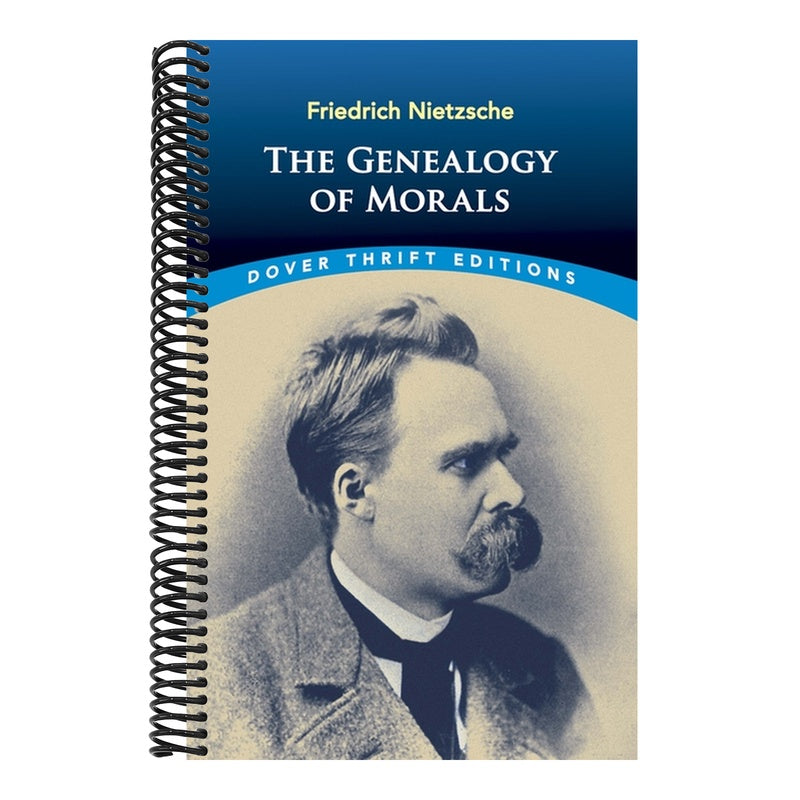
Marc Notes: Translated by Horace B. Samuel;Originally published: New York: Boni and Liveright, 1913. With new introductory note. Jacket Description/Back: Written in response to a book on the origins of...
Vendor
Dover PublicationsType
Print BooksBinding
Spiral BindingCouldn't load pickup availability
People are viewing this right now
Details
Shipping & Returns
Reviews (0)
FAQ
|
Marc Notes: Written in response to a book on the origins of morality by his erstwhile friend Paul Rée, the three essays comprising The Genealogy of Morals--all advancing the critique of Christian morality set forth in Beyond Good and Evil--are among Nietzsche's most sustained and cohesive work. Publisher Marketing: Written in response to a book on the origins of morality by his erstwhile friend Paul Rée, the three essays comprising The Genealogy of Morals -- all three advancing the critique of Christian morality set forth in Beyond Good and Evil -- are among Nietzsche's most sustained and cohesive work. |
Author: Nietzsche, Friedrich
Publisher: Dover Publications
Binding: Paperback
Pub Date: 2003-04-23
BISAC: Literary Collections / General
Subjects: Ethics
Weight: 0.2 lbs
ISBN: 9780486426914
ASIN: -
SKU: SP-9780486426914
Shipping Information: Free delivery on all orders over $45, arrives within 3–5 days, you can also choose expedited shipping
Returns Information: 30-day return policy begins once the item ships, we cover the round-trip shipping costs for returns caused by quality issues (Return Address: 8039 S 192nd ST, STE 120, Kent, WA, 98032)
Exchanges Information: The new order will be processed once the old order is in transit back to the warehouse. Customers will only be charged for the old order if it has not been returned to the warehouse within 14 days
After-Sales Service: Simply email your requirements to support@westbindery.com, and we will process them as soon as possible upon receipt
Customer Service: Online 24/7, we recommend contacting us via email as a first choice, though you can also chat with us online
Value-added service: If you are giving the books as a gift, we also offer gift-wrapping services
Warranty Service: At West Bindery, we are committed to providing you with nothing but the best. We want you to be completely satisfied with your purchase. That's why all West Bindery books come standard Within 30 days warranty
Q: How do I track my order?
A: Order Tracking InformationOnce your order has been placed and processed, you will receive a confirmation email containing your order details. This email will include:
- A tracking number
- A link to our tracking page
How to Track Your OrderClick on the tracking number link in your confirmation email.
Important Notes: Tracking information may not be immediately available after you place your order. It can take up to 36 hours for the tracking number to activate in our system. If no updates are visible right away, please check back later.
Q: What if my package gets lost or arrives damaged?
A: Lost packages: At West Bindery, we strive to ensure every order reaches you in perfect condition. In the event that your order is lost during transit, please reach out to our customer support team here with your order number and any relevant details.
Damaged packages: Please report to our customer support team here within 24 hours of receiving the order and include photos of the damaged items or package. We will review the provided documentation and, if necessary, arrange for a replacement or issue a refund.
Q: Can I change my shipping address after my order is submitted?
A: Unfortunately, we’re unable to change the shipping address once your order has been submitted. If you’ve entered the wrong address, please contact us at support@westbindery.com as soon as possible—we’ll do our best to help before your order ships.
Q: What happens if I accidentally ordered multiple copies of the same book?
A: If you have accidentally ordered multiple copies of the same book, you can return the excess copies by following our return process. Please ensure the items are in their original condition and returned within the 90-day window from the shipping date. Upon receipt and inspection of the items, if the refund is approved, it will be processed on your original payment method. Visit our return center and follow the provided instructions to ensure a smooth and timely return.
Q: I received an incomplete order, what should I do?
A: How to Report an Incomplete Order: To help us address your concern, please follow these steps:
- Email our support team at support@westbindery.com with:Your order numberThe email address associated with your order
- Let us know which item(s) is/are missing from your order.
What Happens Next: Our team will verify your order and investigate the issue. We will contact you within 1 business day with an update or resolution, including sending the missing item(s) or other suitable options.