

What We Eat: A Global History of Food
What We Eat: A Global History of Food
Review Quotes: This highly original, encyclopedic work contains a wide range of succinct, approachable essays on food through the lens of global power and consumerism. Single-food chapters examine elemental foodstuffs...
Vendor
Columbia University PressType
Print BooksBinding
Spiral BindingCouldn't load pickup availability
People are viewing this right now
Details
Shipping & Returns
Reviews (0)
FAQ
|
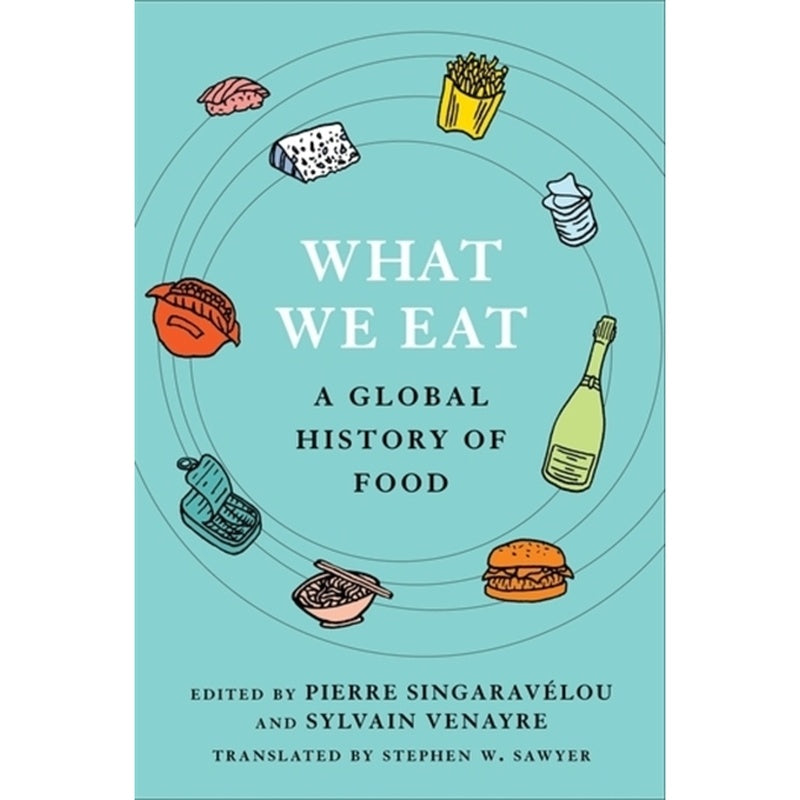
Review Quotes: Pierre Singaravélou is professor of history at Paris 1 Panthéon-Sorbonne University and a former British Academy Global Professor at King's College London. Sylvain Venayre is professor of contemporary history at the University of Grenoble-Alpes. Stephen W. Sawyer is the Ballantine-Leavitt Professor of History and director of the Center for Critical Democracy Studies at the American University of Paris.Table of Contents: Introduction Review Quotes: Using food as a lens through which to draw out the economic, cultural, and social changes wrought by globalization, contributors highlight both what's lost when foods are stripped of their cultural specificity and how cultural exchange can produce creative and beneficial results. Readers will want to dig in.-- "Publishers Weekly" Brief Description: "A political, social, but also intimate world history of food that brilliantly shows us the tension between the promotion of specific cultural identities and the standardization of habits that we usually associate with globalization. Coffee originated as an Ethiopian drink before becoming a globalized product. Ketchup, a symbol of America, is now made largely from Chinese tomato paste. In this book, two historian editors asked some 70 historians take up the challenge of telling a history of the world through one particular food. As a whole the book attempts to explain globalization through food, examining the Westernization of our eating habits as well as the triumph of non-Western dishes such as ceviche or curry in the West. In 88 short chapters-- by Arundhati Virmani, Pascal Ory, Jean-Robert Pitte, and others--on such topics as gin, the sandwich, sparkling water, port, tapioca, animal crackers, sake, corn flakes, doner kebab, tofu, pizza, the hot dog, bagels, ramen, sushi, naan, guacamole, and many more--the editors examine how food products help us to understand globalization and its limits. Each brief chapter concludes with a short further reading list. The result is an unusual and fascinating journey into the great grocery store of the world"-- Publisher Marketing: Ketchup seems iconically American, but the word comes from a Southeast Asian anchovy sauce, and today it is made largely from Chinese tomato paste. Japan's beloved ramen arose from the meeting of Chinese noodles and American wheat flour before attaining worldwide popularity in both gourmet and convenience-food forms. The baguette is mythologized as a product of the French Revolution, but in fact it emerged during late-nineteenth-century urbanization. Colonialism brought baguettes to Vietnam, where street vendors devised a new dish: banh mi, which refugees took with them around the world. Telling these tales and many others, What We Eat explores world history through the lens of the global journeys of nearly ninety food products. Leading historians trace the origins and popularization of items commonly found in supermarkets, showing how each food illuminates wider histories. They consider the tension between the role of cuisine in shaping particular cultural identities and the standardization associated with globalization, and they demonstrate how foods have transformed as different societies have borrowed them. Chapters reveal the surprising sagas of coffee, cornflakes, gin, guacamole, hot dogs, hummus, naan, pet food, pizza, sparkling water, sushi, and many more. At once an intimate and a global history, What We Eat shows readers the everyday items on grocery store shelves in a new light.Review Citations:
Contributor Bio:Sawyer, Stephen W |
Author: Singaravélou, Pierre
Publisher: Columbia University Press
Binding: Paperback
Pub Date: 2025-08-12
BISAC: History|Social History|Cooking|Essays & Narratives|Cooking|History|History|World|General
Subjects: Food|Food habits|History
Weight: 1.11 lbs
ISBN: 9780231221474
ASIN: -
SKU: SP-9780231221474
Shipping Information: Free delivery on all orders over $45, arrives within 3–5 days, you can also choose expedited shipping
Returns Information: 30-day return policy begins once the item ships, we cover the round-trip shipping costs for returns caused by quality issues (Return Address: 8039 S 192nd ST, STE 120, Kent, WA, 98032)
Exchanges Information: The new order will be processed once the old order is in transit back to the warehouse. Customers will only be charged for the old order if it has not been returned to the warehouse within 14 days
After-Sales Service: Simply email your requirements to support@westbindery.com, and we will process them as soon as possible upon receipt
Customer Service: Online 24/7, we recommend contacting us via email as a first choice, though you can also chat with us online
Value-added service: If you are giving the books as a gift, we also offer gift-wrapping services
Warranty Service: At West Bindery, we are committed to providing you with nothing but the best. We want you to be completely satisfied with your purchase. That's why all West Bindery books come standard Within 30 days warranty
Q: How do I track my order?
A: Order Tracking InformationOnce your order has been placed and processed, you will receive a confirmation email containing your order details. This email will include:
- A tracking number
- A link to our tracking page
How to Track Your OrderClick on the tracking number link in your confirmation email.
Important Notes: Tracking information may not be immediately available after you place your order. It can take up to 36 hours for the tracking number to activate in our system. If no updates are visible right away, please check back later.
Q: What if my package gets lost or arrives damaged?
A: Lost packages: At West Bindery, we strive to ensure every order reaches you in perfect condition. In the event that your order is lost during transit, please reach out to our customer support team here with your order number and any relevant details.
Damaged packages: Please report to our customer support team here within 24 hours of receiving the order and include photos of the damaged items or package. We will review the provided documentation and, if necessary, arrange for a replacement or issue a refund.
Q: Can I change my shipping address after my order is submitted?
A: Unfortunately, we’re unable to change the shipping address once your order has been submitted. If you’ve entered the wrong address, please contact us at support@westbindery.com as soon as possible—we’ll do our best to help before your order ships.
Q: What happens if I accidentally ordered multiple copies of the same book?
A: If you have accidentally ordered multiple copies of the same book, you can return the excess copies by following our return process. Please ensure the items are in their original condition and returned within the 90-day window from the shipping date. Upon receipt and inspection of the items, if the refund is approved, it will be processed on your original payment method. Visit our return center and follow the provided instructions to ensure a smooth and timely return.
Q: I received an incomplete order, what should I do?
A: How to Report an Incomplete Order: To help us address your concern, please follow these steps:
- Email our support team at support@westbindery.com with:Your order numberThe email address associated with your order
- Let us know which item(s) is/are missing from your order.
What Happens Next: Our team will verify your order and investigate the issue. We will contact you within 1 business day with an update or resolution, including sending the missing item(s) or other suitable options.