

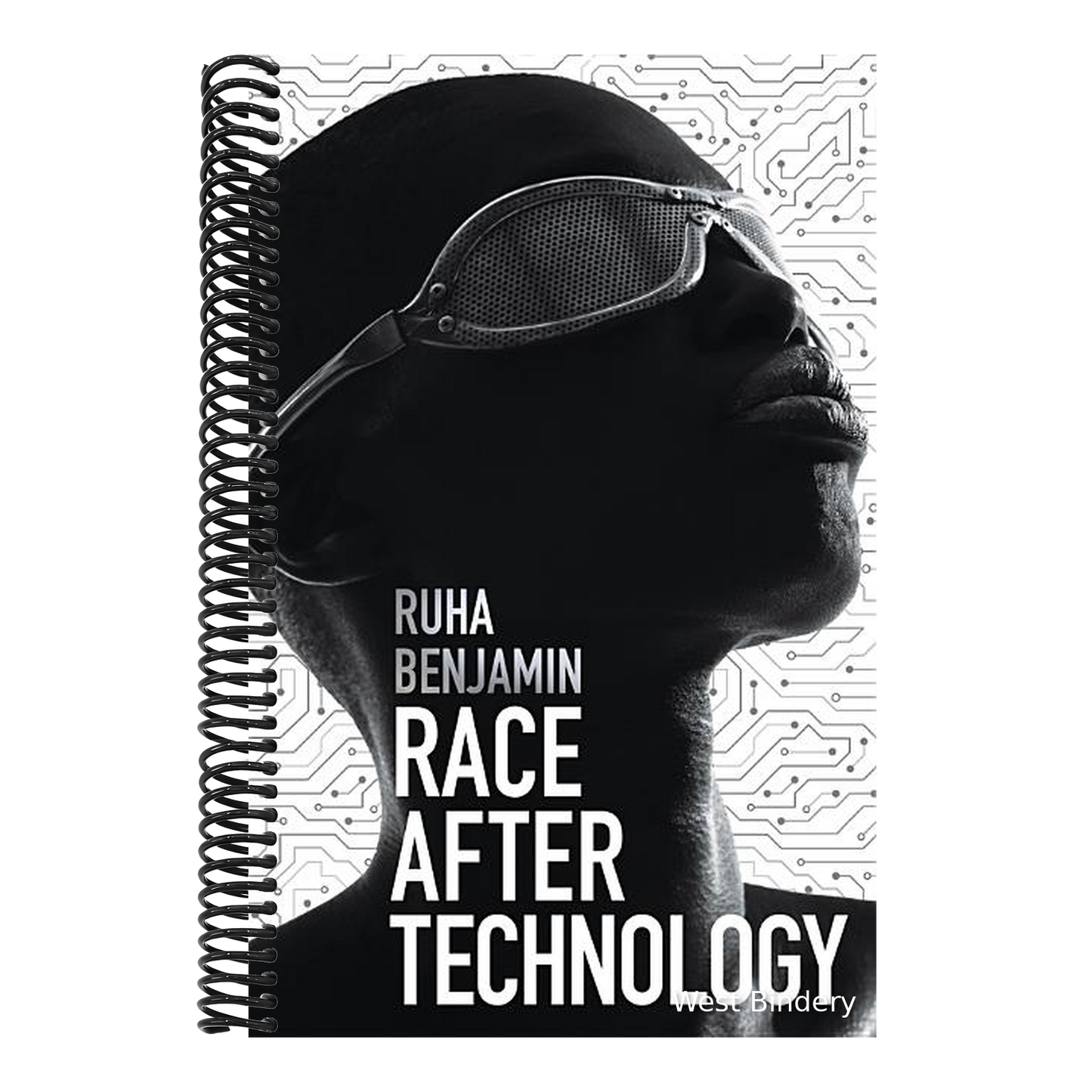
Race After Technology: Abolitionist Tools for the New Jim Code
Race After Technology: Abolitionist Tools for the New Jim Code
Biographical Note: Ruha Benjamin is Associate Professor of African American Studies at Princeton University Table of Contents: Preface Introduction: The New Jim Code 1 Engineered Inequity: Are Robots Racist? 2...
Vendor
Polity PressType
Print BooksBinding
Spiral BoundCouldn't load pickup availability
People are viewing this right now
Details
Shipping & Returns
Reviews (0)
FAQ
|
Biographical Note: Ruha Benjamin is Associate Professor of African American Studies at Princeton University Table of Contents: Preface Introduction: The New Jim Code 1 Engineered Inequity: Are Robots Racist? 2 Default Discrimination: Is the Glitch Systemic? 3 Coded Exposure: Is Visibility a Trap? 4 Technological Benevolence: Do Fixes Fix Us? 5 Retooling Solidarity, Reimagining Justice Acknowledgments Appendix Notes References Index Review Quotes: Winner of the ASA Section on Racial and Ethnic Minorities Oliver Cromwell Cox Best Book Award 2020 Awarded Honorable Mention in the ASA Communication, Information Technologies, and Media Sociology Section's Book Award 2020 Winner of Brooklyn Public Library's Literary Prize for Nonfiction 2020 "Race After Technology is a brilliant, beautifully argued, engagingly written, and groundbreaking work. Ruha Benjamin is that rare scholar whose sophisticated understanding of science and technology is matched by her deep knowledge of race and racialization. Here she guides us into fresh terrain for understanding and tackling the persistence of racial inequality. This book should be read by everyone committed to creating a more just world." "Race After Technology is essential reading, decoding as it does the ever-expanding and morphing technologies that have infiltrated our everyday lives and our most powerful institutions. These digital tools predictably replicate and deepen racial hierarchies -- all too often strengthening rather than undermining pervasive systems of racial and social control." "This book is the best single overview of how and why new technologies perpetuate and exacerbate racism." "This book is worthy of the widest readership, leaving us not only with a deeper understanding of the mutual and shifting roles of race and technology, but also, importantly, with the manageable and doable tools with which to create alternative, equitable, inclusive and prosperous futures." "Race After Technology is a scintillating examination of how even something as seemingly all-oppressive as surveillance normalization is differentially oppressive -- and how we can build alternative futures and solidary coalitions all the same." "Race After Technology spins [a] web of examples over the reader's own understanding of technology and leaves the reader with a new lens to view the world around them." "Powerful yet accessible, [...] it is the foundation for an expanded, critical conversation about the meaning of technology in society that desperately calls for greater attention, both academic and activist." "Benjamin's work is ideal for anyone who is unafraid to look at the historical intersections of racial injustice, technology, and where these topics inform possible solutions for the future." "[I]mpactfully written, well researched and refreshingly clear [...] Simply said, Race After Technology will become a staple in contemporary critical thinking at a time when it is most needed." "Shines light on an important issue" "Ruha Benjamin contributes to our understanding of the dangers of racism in the 21st century in her illuminating account of how racism and inequality underpin new technologies. Benjamin reminds us that racism is everywhere - and by its very nature not only seeps into technological advances but is part of how they are designed." "What's ultimately distinctive about Race After Technology is that its withering critiques of the present are so galvanizing.... This is perhaps Benjamin's greatest feat in the book: Her inventive and wide-ranging analyses remind us that as much as we try to purge ourselves from our tools and view them as external to our flaws, they are always extensions of us. As exacting a worldview as that is, it is also inclusive and hopeful." "What sets her [book] apart is not her lucid, clear and engaging writing style but rather her broad empirical scope which covers examples from digital security and surveillance infrastructures right through to search engines and AI-powered beauty apps. They are exemplify what Benjamin calls the new Jim Code." "Benjamin has broken new ground with this volume, which is a crucial read for a wide audience, including novice consumers of technology all the way to the most experienced coders and creators." "One of the most interesting elements of Race After Technology is that it moves us from the fantasy world of the allegedly neutral robot into a world where we have to reckon with the unintended consequences of digital discrimination." "Race After Technology provides a clear and useful synthesis of concepts of race within the broader science and technology studies discourse." "In her latest book, 'Race After Technology: Abolitionist Tools for the New Jim Code' Ruha Benjamin offers a detailed, critical and sobering view of the ways in which bias is infused into technology. [....] 'Race After Technology' presents a wide range of examples of discriminatory design and offers a toolkit for understanding the ways in which technology can reinforce and deepen societal inequalities." Brief Description: "From everyday apps to complex algorithms, Ruha Benjamin cuts through tech-industry hype to understand how emerging technologies can reinforce white supremacy and deepen social inequity. Far from a sinister story of racist programmers scheming on the dark web, Benjamin argues that automation has the potential to hide, speed, and even deepen discrimination, while appearing neutral and even benevolent when compared to racism of a previous era. Presenting the concept of the "New Jim Code," she shows how a range of discriminatory designs encode inequity: by explicitly amplifying racial hierarchies, by ignoring but thereby replicating social divisions, or by aiming to fix racial bias but ultimately doing quite the opposite. Moreover, she makes a compelling case for race itself as a kind of tool - a technology designed to stratify and sanctify social injustice that is part of the architecture of everyday life. This illuminating guide into the world of biased bots, altruistic algorithms, and their many entanglements provides conceptual tools to decode tech promises with sociologically informed skepticism. In doing so, it challenges us to question not only the technologies we are sold, but also the ones we manufacture ourselves"-- Publisher Marketing: From everyday apps to complex algorithms, Ruha Benjamin cuts through tech-industry hype to understand how emerging technologies can reinforce White supremacy and deepen social inequity. Benjamin argues that automation, far from being a sinister story of racist programmers scheming on the dark web, has the potential to hide, speed up, and deepen discrimination while appearing neutral and even benevolent when compared to the racism of a previous era. Presenting the concept of the "New Jim Code," she shows how a range of discriminatory designs encode inequity by explicitly amplifying racial hierarchies; by ignoring but thereby replicating social divisions; or by aiming to fix racial bias but ultimately doing quite the opposite. Moreover, she makes a compelling case for race itself as a kind of technology, designed to stratify and sanctify social injustice in the architecture of everyday life. This illuminating guide provides conceptual tools for decoding tech promises with sociologically informed skepticism. In doing so, it challenges us to question not only the technologies we are sold but also the ones we ourselves manufacture. Visit the book's free Discussion Guide: www.dropbox.com Review Citations:
|
Author: Benjamin, Ruha
Publisher: Polity Press
Binding: Paperback
Pub Date: 2019-06-24
BISAC: Technology & Engineering|Social Aspects|Computers|Social Aspects|Social Science|Discrimination (incl. Prejudice, Racism, Colorism, etc.)|Social Science|Social Classes & Economic Disparity|Social Science|Demography
Subjects: Digital divide|United States|21st century|Information technology|Social aspects|African Americans|Social conditions|Whites|Race relations|SOCIAL SCIENCE / Demography
Weight: 0.8 lbs
ISBN: 9781509526406
ASIN: -
SKU: SP-9781509526406
Shipping Information: Free delivery on all orders over $45, arrives within 3–5 days, you can also choose expedited shipping
Returns Information: 30-day return policy begins once the item ships, we cover the round-trip shipping costs for returns caused by quality issues (Return Address: 8039 S 192nd ST, STE 120, Kent, WA, 98032)
Exchanges Information: The new order will be processed once the old order is in transit back to the warehouse. Customers will only be charged for the old order if it has not been returned to the warehouse within 14 days
After-Sales Service: Simply email your requirements to support@westbindery.com, and we will process them as soon as possible upon receipt
Customer Service: Online 24/7, we recommend contacting us via email as a first choice, though you can also chat with us online
Value-added service: If you are giving the books as a gift, we also offer gift-wrapping services
Warranty Service: At West Bindery, we are committed to providing you with nothing but the best. We want you to be completely satisfied with your purchase. That's why all West Bindery books come standard Within 30 days warranty
Q: How do I track my order?
A: Order Tracking InformationOnce your order has been placed and processed, you will receive a confirmation email containing your order details. This email will include:
- A tracking number
- A link to our tracking page
How to Track Your OrderClick on the tracking number link in your confirmation email.
Important Notes: Tracking information may not be immediately available after you place your order. It can take up to 36 hours for the tracking number to activate in our system. If no updates are visible right away, please check back later.
Q: What if my package gets lost or arrives damaged?
A: Lost packages: At West Bindery, we strive to ensure every order reaches you in perfect condition. In the event that your order is lost during transit, please reach out to our customer support team here with your order number and any relevant details.
Damaged packages: Please report to our customer support team here within 24 hours of receiving the order and include photos of the damaged items or package. We will review the provided documentation and, if necessary, arrange for a replacement or issue a refund.
Q: Can I change my shipping address after my order is submitted?
A: Unfortunately, we’re unable to change the shipping address once your order has been submitted. If you’ve entered the wrong address, please contact us at support@westbindery.com as soon as possible—we’ll do our best to help before your order ships.
Q: What happens if I accidentally ordered multiple copies of the same book?
A: If you have accidentally ordered multiple copies of the same book, you can return the excess copies by following our return process. Please ensure the items are in their original condition and returned within the 90-day window from the shipping date. Upon receipt and inspection of the items, if the refund is approved, it will be processed on your original payment method. Visit our return center and follow the provided instructions to ensure a smooth and timely return.
Q: I received an incomplete order, what should I do?
A: How to Report an Incomplete Order: To help us address your concern, please follow these steps:
- Email our support team at support@westbindery.com with:Your order numberThe email address associated with your order
- Let us know which item(s) is/are missing from your order.
What Happens Next: Our team will verify your order and investigate the issue. We will contact you within 1 business day with an update or resolution, including sending the missing item(s) or other suitable options.